My supports consist of my family, friends and colleagues. My family has always been there for and has encouraged me to follow my hopes and dreams and enter the field of early childhood. It is because of their support and encouragement that I am in the graduate program at Walden today. My friends are always there to listen when I need a break or just to vent about a dilemma. My colleagues are like my “school family” without their advice and support I would be even more overwhelmed and stressed then I already am. We all work together and share many of the same issues in school, so it is easy to talk to one another and offer each other advice and resources. Without these people my life would be very different, I truly think that I would have given up on this profession by now, simply because you do so much and are not appreciated and not as effective as I want to be and the economy has made jobs harder to find. However they have encouraged me not give up and because of their wonderful support, to them I am grateful, especially my parents and my husband.
Friday, February 11, 2011

Saturday, January 29, 2011
My Connections to Play
“The most effective kind of education is that a child should play amongst lovely things.”
Plato
Children need the freedom and time to play. Play is not a luxury. Play is a necessity.
Kay Redfield Jamison


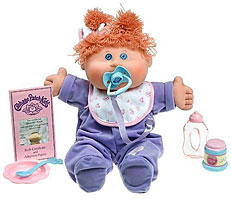
When I was little I was encouraged to play all the time and was certainly provided a number of toys. However, some of my fondest memories of play were educational ones now that I look back. Reading with Teddy Ruxpin was one of my favorite things to do along with playing school. I also enjoyed playing grocery store with my grandmother and using her calculator as my register.
Play today in my opinion offers the same learning benefit, however today children are not given the opportunity to play freely. It seems like many children are always on the go and there is not enough time for free play, which is where one gets to use their imagination and express their creativity. I hope children are able to experience free play opportunities and that they are not always playing on video games or on the computer because it keeps them quiet. The more play a child is able to participate in the more experiences they handle and learn from.
Play in my life was a wonderful experience. I was able to express my creativity and use my imagination in a number of different play ideas, with and without others. I feel that play helped me in all developmental areas as I was growing up. Play truly is beneficial and I only hope that I can encourage the children and their families that I work with about the importance of play.
Friday, January 14, 2011
Immunizations
I believe that immunizations are very important to not only young children but also the public’s health as well. Immunizations are there to help all grow healthy and be safe against such preventable diseases and as a future teacher I want to keep my classroom, including my students and myself healthy and safe. The United States is very lucky to have a number of immunizations to help prevent these diseases, while many other countries do not. For example, in Nigeria there is a very high mortality rate caused by vaccine preventable diseases and they are hoping to cut the mortality in half by the year 2015 with the help of WHO and the government. The government has created programs to help with this task and have already seen a decrease. Like the United States they now have a routine immunization schedule and national immunization days. They are still fighting disease that we see little very little here in the states such as Polis and Measles. They are gradually making progress which is certainly a step in the right direction.
With working in a public school system I am fortunate enough that the system requires certain immunizations before entering school, and that I am not the one that would have to enforce this requirement to the families of the children I am teaching. However if the topic was ever to come up I would be able to discuss the immunizations and their importance and their benefits with the families.
Wednesday, December 15, 2010
A Note of Thanks
I would like to thank everyone for a wonderful learning experience the past eight weeks. I have not only learned from the course material and professor, but my classmates as well. I wish everyone a wonderful holiday and best of luck in future courses.
When I think of Child Development....
I could not agree more with this quote. As professionals in the early childhood field, it is our job to educate the children that come to us with the best of our ability; however it is also the job of the family and world around them to reinforce what is being taught. It is everyone working together that helps mold “the whole child”.
Saturday, December 11, 2010
TESTING……..
I personally feel that having a commitment to the whole child is extremely important to understanding the overall development of the child and who he/she really is. However most education systems lose sight of what is important and focus on meeting high standards set by the state and country instead of focusing on what’s truly important, the education of the children.
When it comes to standardized tests in these middle years, I see the pros and cons of both, but I personally do not care for them. It's nice to see how the students are doing state wide and nationally and see what skills the students are successful with and those that they are struggling with.
I think that the pressure that these tests have creates have caused some school systems to teach the test and not teach the students needs. In many cases it is believed that the test measure what children bring to school and not always what they learn in school. They measure the kinds of native smarts that kids walk through the door with. They measure the kinds of experiences the kids have had with their parents, they do not measure what is taught school (James Popham, Interview with Frontline). In my opinion the school systems need to stick with their curriculum and teach how to test, so that children feel comfortable and less stressed and relate the curriculum to their everyday lives.
Over all I have learned that assessment is a very important factor in every lesson, but it does not always have to be a worksheet or standardized test. I feel that assessment can really be catered to a classes needs and even to the individual students.
Assessment in the classroom does not have to be a difficult task, a teacher should already be following the curriculum, therefore one of the easiest assessments he/she can do is to document as much as they possibly can about what the children can do with and without support. By documenting such things, it can help us maximize the student’s chances of being successful learners.
As educators we need to remember that each child is unique and learn differently. We can assess their learning different ways too. For example we could measure a skill by playing games, or making things. The best thing to do is to ensure that these assessments are not pushing the child into a stressful state of mind as it will just cause them not to do well, make them feel comfortable. Over all when assessment is taking place in classroom, I want a pressure free zone. I want my students to have fun with the learning experience and not worry about what I am writing down. I want them to obtain the information presented and remember the fun way they learned it.
Coming from an Italian family I always like to learn about Italy and chose to research their school system and assessment.
The Italian school system is free and begins at age six being mandatory. This marks the years noted as primary, ages six to eleven. During these years the students study Italian, English, geography, history, math, science technology, music, art, physical education, and Catholicism and information technology. The average class size in primary school is ten to twenty five students. In the classrooms there are often two teachers and the subjects are divided among them. In parts of Italy students attend school six days a week for five hours a day, from September to June, while others go to school five days a week but all day. Most primary schools use a system of assessment based on teacher observation throughout the school year. The assessments are then recorded on each child’s report card. The record card is passed to the students’ next school when he/she leaves. In the fifth and final year of primary school, students must a primary school leaving certificate to progress to lower secondary school; those who are unsuccessful may need to repeat their final year. In other areas an exam to enter lower secondary which we know as middle school is required.
Saturday, November 27, 2010
Children and Stress
In recent years I came across a little boy who unfortunately experienced the stress of chaos, daily. This young man came from a home which in included his mother, father and brother, but their home life was complete chaos. The mother would always scream, no consistency in controlling the household, the older brother would hit, kick, bite, and pinch this little boy who was only six (6). He was often not bathed and wore the same clothing for days at a time. Reports were made and filed to the proper authorities often, however investigations only found minor things and offered very little help to the family. The school became his only place for routine and normalcy, which was sometimes hard due to his defiant behavior as well as some learning disabilities. They learned that this young man often responded well to immediate positive reinforcement and extra attention, which again was hard with 21 other students. The help that was offered outside of school truly did not make a difference but the school resources really helped this young man and he did progress slightly throughout the year.
One stressor I found about children in China is the fear/anxiety they have about school and being successful. They fear the exams, the teachers and their parents. It is said one three students experiences this stress and that they have physical symptoms such as headaches and stomach aches. Here the students are compared to one another often and knowingly and each parent wants their child to have an edge and in order to so they push them tremendously. Currently this issue is being looked at regularly and being monitored to find a solution to this problem.
Subscribe to:
Posts (Atom)